History & Heritage
From Thracian settlements to Roman Philippopolis, medieval fortifications and Ottoman monuments, Plovdiv is a living timeline where ancient structures stand beside a modern city.
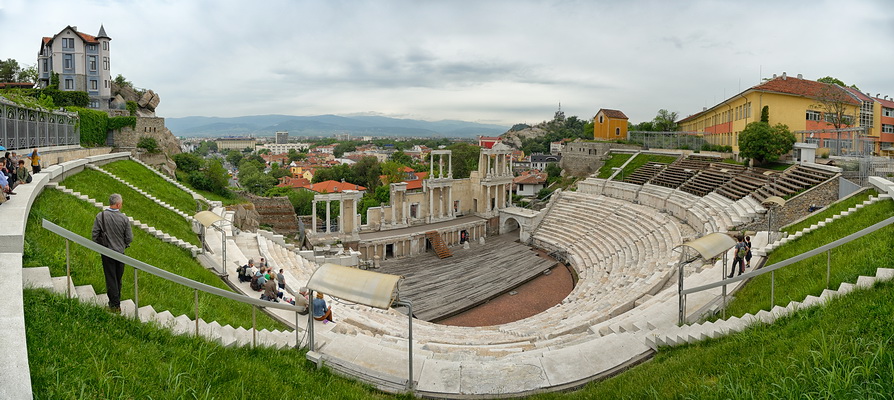
Ancient Theatre
The theatre was one of the major public buildings of ancient Philippopolis. The open area includes 28 concentric rows of marble seats. In addition to theatrical performances and sittings of the National Assembly and the Union of Thracian Cities, the theatre also hosted gladiatorial fights.
Opening times: Summer: 09:30–18:00 Winter: 09:00–17:30 Lunch break: 12:30–13:00
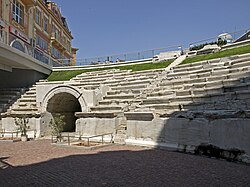
Ancient Roman Stadium
The Stadium of Philippopolis was the ancient Roman stadium of the city, built in the 2nd century AD during the Roman imperial period. It is among the largest and best preserved buildings from the time of the Roman Empire in the Balkan peninsula.
Opening times: Summer: 09:30–18:00 Winter: 09:00–17:30 Lunch break: 12:30–13:00
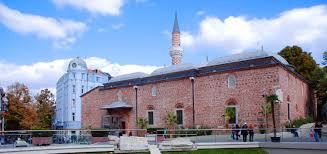
Dzhumaya Mosque & Solar Clock
Located in the centre of Plovdiv, Dzhumaya Mosque was built in 1363–1364 on the site of the Sveta Petka Tarnovska Cathedral Church after the conquest of Plovdiv by the Ottoman army. During the reign of Sultan Murad I in the 15th century the old building was demolished and replaced by the modern-day mosque.
The mosque stands between the main pedestrian street and the Kapana district and is still an active place of worship. Visitors are generally welcome outside of prayer times, with respectful clothing and behaviour.
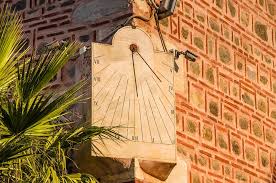
Solar Clock (Sundial)
On the south-west corner of the mosque façade, overlooking the central square, a stone sundial was placed in 1878, donated by a Russian officer who was a cartographer for Emperor Alexander II. The sundial measures time by the change in the length of the shadow of the hand and its movement across the dial.
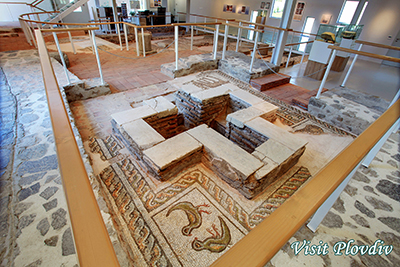
Small Basilica
The basilica was built in the second half of the 5th century AD and contained rich architectural decoration including a marble colonnade between the naves, a marble altar screen, a pulpit, and a synthronon in the altar apse. The total length of the building is about 20 metres and its width is 13 metres.
Opening times: Monday: 09:30–18:00 Thursday: 09:30–18:00 Friday: 09:30–18:00 Saturday: 09:30–18:00 Sunday: 09:30–18:00 (Closed Tuesday & Wednesday)